Wanna know more?

Reflections on culture, creativity, and the moments that shape our lives in Ghana and beyond.

Wednesday, June 19, 2013

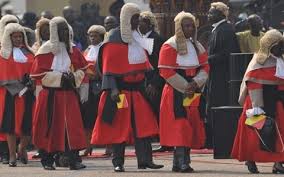
ELECTION PETITION; NEGATIVES OUTWEIGHED


It is obvious that the election petition is having grave repercussions on the economy of Ghana.  As a person working within the construction industry, I can feel the impact rather directly. Most contracts and projects are all pending! Most construction companies in Ghana are suffering! Workers within the industry are underemployed; people sit idle at work each day, because there is nothing to be done! Business has slowed down dramatically. Jobs are on hold for fear of the consequence of the election petition. A greater proportion of workers have been laid off, and it still continues. Workers are generally living in fear of the next day because they do not know when they would be in line for eviction.


Most contracts are pending because companies and potential investors, especially foreign, are unwilling to sign new contracts for the reason of the unknown; uncertainty. National stability is a key in any investment and business. No one would want to invest in a nation, which seems to be balancing on a scale of uncertainty. None knows who judgment might favour. And so, all live in wait. All are watching keenly. None wants to fall victim to a judgment debt saga! No one wants to be a second Wayome. 

The issue of underemployment or unemployment pertains in all sectors of the economy, and so, Ghanaians are complaining. Business is slow! There are no jobs! There is no money! In our markets, sales have declined, because there is no money.

Rather interestingly, it is as though our honourable leaders and politicians are unaware. Nothing is being done to boost this rapidly declining economy. We need an intervention of some sort. We need money. We need jobs. What is our leadership doing to make things better? 

For a fact, the election petition is having its toll on the economy. Of course, we all acknowledge the importance of the whole procedure in the area of transparency and accountability. But the question now is: How long until judgment? How long must we wait until the judgment is declared? How long must we sit idle, unemployed or underemployed, until things return to normalcy? How many more months would the country be in court? 

We need normalcy for prospective investors. We need normalcy for stability. We need our country back in order to ensure our growth and development. At the moment, everything seems to be at a standstill! Productivity in this country has rapidly declined. How long must Ghanaians endure the repercussions of the election petition? This is a question from all Ghanaians to our leaders?

I would want to believe that the whole election results re-battle is truly for the sake of promoting democracy, as has been publicly and widely acclaimed, and not solely for the selfish interest of someone or some people. We can to some extent feel the impact of this whole process on our nation’s economy, and do hope that such a somewhat unfortunate incidence, does not repeat itself because Ghana is beyond us all. Ghana continues paying the price for the atrocities that have been committed by her people. Ghanaians ought to start thinking beyond themselves, by putting the nation first.

Let us not create turmoil, where there is not. For a fact, the whole world is watching us. Ghana is a country that has found herself sandwiched between warzones, but has always managed to remain steadfast. That is our pride as a nation. Let us not take it for granted. The price of peace is negligible, when compared to the price of war or chaos. Let us not take our harmony for granted as a nation. 

We need our nation back. We need to steer this nation back on the track of progression, and not retrogression. Ghana needs us all! Our supreme court ought to fast-track the election petition because prolonging it, would kill this nation, rather than serve anything good. In Ghana today, most businesses and business plans, are created, with the election petition in focus. I am even sure that in parliament, most proceedings are taken with respect to the election petition. Whatever plans being made, are being done with the election petition in focus. The judgement is the focus. Most business negotiations now have a common condition; ‘if’. 

By far, the negatives of the election petition seem to be outweighing the positives...

Anna Esi Hanson (nnhanson2@yahoo.com); esociocomm.blogspot.com

Wednesday, June 12, 2013

AFRICA AND HER UNCELEBRATED HEROES


Have you ever listened to a tribute that made you wonder if you were actually at the right place? Wow, am I at the right funeral? Is this the same person that I know of? Because at that moment, the person sounds like a saint! And that is supposed to be the worse person we all know of! The irony of our society!

Yes, it is in death that most people are celebrated! While alive however, it is as though they do not exist! There are so many of our departed friends and relations that we constantly wish were alive with us today because if they were, we would do so many things differently. If they were alive, we would make enough time to be with them. If they were alive, we would give them all the love and support they deserved. If they were alive, we would provide them with all the material things the world can offer. If only! If only! If only! That is the prefix for our regrets. 

For a fact, Ghana has a poor track record of celebrating her heroes! In all our history, one man has always been celebrated; Dr. Kwame Nkrumah, for his immense contribution to the liberation of the continent, and this country! Even for this man, the form of appreciation he received raises a huge question mark. For a fact, it has taken longer than it should for Dr. Kwame Nkrumah to receive the kind of recognition he deserves. 

What about our other heroes? This country can boast of several people who have contributed immensely to her growth and development. Quite regrettably, several of these people are departed. However, it is good to know that some are living although such are being taken for granted. It is not surprising, considering the fact that this country has a poor history of documentation. We cannot even keep track of these people, and their individual contributions! We only remember them in our tales!
In the arts and crafts, music, sciences, history, government to mention but a few, several people paved the path that most of us now tread on. People like Wole Soyinka, Chinua Achebe, Ngũgĩ wa Thiong'o, Steve Biko, Ama Ata Aidoo, Nadine Gordimer, Buchi Emecheta and Okot p'Bitek. The bumpy roads of the past have been paved! And yet, they only reign in the realms of literature.

Most African writers and musicians of the past were the forces of change. They were the forces that somehow steered our continent this far. They were the voices of hope and inspiration!  Had we actually listened to them, much more would have been done for this continent. But like our other heroes, they only dwell in the realm of our imaginations. For the writers, they only exist in our world of literature; for those who actually appreciate literature. 

Africans only read for reading sakes. We watch movies for entertainment. In listening to music, we only enjoy the stories, and it ends there. We sing the chorus, but never gain anything from it. We look out for the twist and turn in a novel or movie, and so, fail to grasp or appreciate the true meanings. The words of our writers only stay in books. The only literature we truly appreciate are our text books. We do not take the words of our own; unless of course, it was written by a western author. Then we would do as they say! How then do we grow?

We only love and revere professional and relationship advice. When it comes to advice that would lead to a phenomenal change of life in terms of our attitudes and behaviour, we are subjective. We must shy away from the celebration of our heroes through awards or plaques but take a deeper meaning of learning from their examples. They should inspire us.

Chinua Achebe wrote several powerful literature. Most readers only analyzed these literature for the sakes of literature appreciation but never take lessons. There are underlying truths that should inspire us. We only attack the characters, but fail to recognize them in us, and in our society. Africa is failing, because Africans prefer to take advice elsewhere. Our writers in the past were forces of change and our literature, the tools.

Indeed there is some truth to the assertion that ‘If you want to hide something from the African, put it in a book.’

I write each day to inspire a change in our attitudes as a people but as always, what do people say when they see an article of mine online?  ‘Oh, here is another article by Anna Esi Hanson. Let’s see what she has to say today. Oh, here is another article, what does it say.’ We only read, and move on to the next page. We take no lessons. Those who respond to our articles are disappointingly more interested in attacking the writer, than the issue highlighted. 

Anna Esi Hanson (nnhanson2@yahoo.com), Takoradi; esociocomm.blogspot.com

Wednesday, June 5, 2013

THE BLACKMAN: THE AFRICAN PERSPECTIVE


In Ghana, Bibini blackman, is a popular comment that often pops out of people’s lips during conversations. It usually comes with a negative sting. Whenever Africans meet to share stories of their disappointment and betrayal by their families and friends of African descent, it usually ends with the statement, ‘Blackman’. When we encounter people who are unwilling to embrace any form of positive change, we usually say ‘Bibini Blackman’. And by and by, the word Blackman sounds so negative.

But in the Ghanaian Akan parlance, can ‘Bibini’ be exactly synonymous to ‘Blackman’?

I sometimes wonder what the definition of black has now become because when I examine the complexion of my African brothers and sisters, I do not see the black that we are labeled as. I see people of varied complexion, and not necessarily dark or black as we are all labeled as. A greater proportion of Africans in our various countries can attest to this. And yet, we are still referred to as black. I believe someone somewhere is colour-blind.

I believe the African was racially referred to as black in a bid to lower our self-esteem, and not really for our complexion. It is more for the usual stigma with which people identify the colour black; darkness, evil, shame, destitute, sickness, poverty, grief, hopelessness, to mention but a few.

Although an African and a proud one at that, I would prefer to be called an African than the usual word ‘Black’. Yes, we tell ourselves, that black is good, black is beautiful. Black is natural. Of course, that is only a consolation. In truth, we live in perpetual fear of darkness. Indeed, anything negative, we do, is done under the cover of darkness.

I am proudly an African. I might be referred to as black, although my complexion might not necessarily be so. But what is proud about the colour black itself?

Our world has made it so. When someone wears anything black, we first ask if they have been bereaved; yes, it is a colour of mourning. When we encounter bad days, we label them as black e.g. black Friday, black Tuesday, to mention but a few. When we picture hell, we picture darkness; at least, the good book tells us so. When we talk about shame and anything sad, terrible or evil, we only paint them in black. Most people are afraid of their own shadows; because it is dark and scary! We loathe darkness! Darkness is sinister, mysterious or gloomy; no one wants that.

How then can black be good? How then can black be anything worth being proud of when we continually make such remarks as ‘The black mentality’?

Is then surprising that some Africans these days prefer to bleach? Oh yes, they hate their complexion!
As Africans, whenever we talk about backstabbing friends, relations, betrayal, we only lament saying ‘Blackman’. And so, in our own ways, by our own actions and inactions, we further endorse the idea that anything black is negative. How then do I exclaim that black is beautiful?

Africa is known as the Dark Continent; the mention of her name, sends shivers down the spine of people and their imaginations, ablaze. Is there any positivity in that? Why is she dark? What was the rationale or criteria? Yes, Africa is known as the Dark Continent in the negative sense. We are presumably the poorest, suffer from disease infestations, war-torn, struck by hunger; it is all negative.

Who called the African ‘Black’? Was it more out of spite than complexion?

And somehow, Africans have been born to accept it. And so, we call ourselves black, together with anything negative. And for that, we keep attracting negative energies. We embrace all things negative. For that, the continent suffers from deprivation, underdevelopment, pandemics, poverty, to mention but a few. It has been embedded in our psychology, and for that, the continent suffers. We are told that Africa and for that matter, Africans cannot do well for ourselves, and so, we keep depending on foreign economies. Africa cannot fend for herself. We cannot even decide on our own. We cannot even feed ourselves! Oh you African, wise up!
This article is not to promote any form of hatred or racially motivated attacks. It is only meant to evoke our thoughts.


Anna Esi Hanson (nnhanson2@yahoo.com), Takoradi; esociocomm.blogspot.com

Fuel Prices Drop, Transport Fares Stay High: A Familiar Ghanaian Story

  Fuel prices have dropped, hooray! Whiles the car-owner is quietly popping champagne, or at least imagining it, the ordinary passenger is c...